
Human civilization has never followed a simple path. Across thousands of years, societies have risen, developed cities, created impressive technologies, built trade networks, and eventually changed or disappeared. Some left behind detailed written records, while others are known mainly through ruins, artifacts, monuments, and scattered traces.
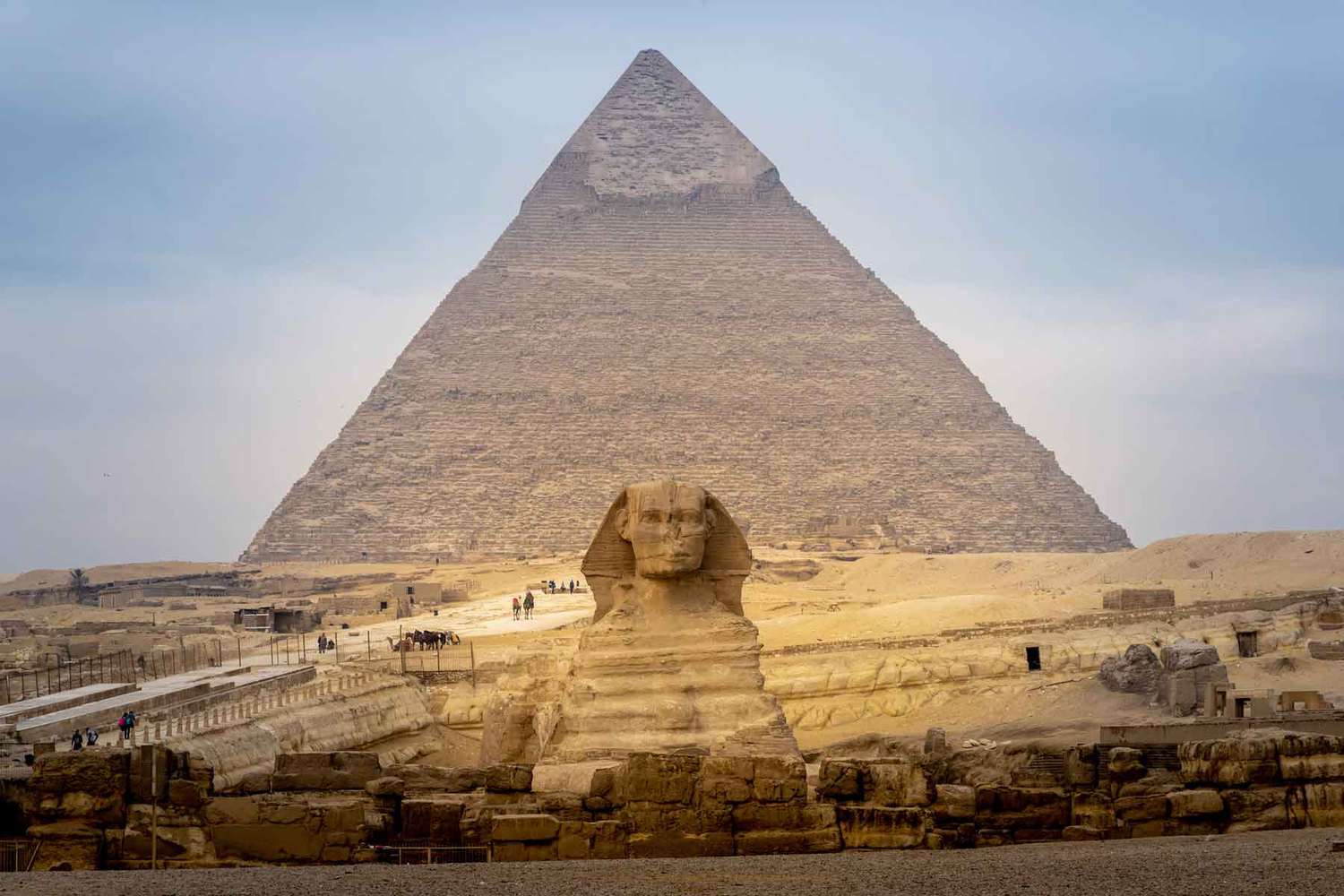
The disappearance of an ancient civilization does not always mean that its people vanished completely. Communities could migrate, merge with neighboring populations, change their traditions, or abandon particular cities because of environmental or political changes.
For modern researchers, these ancient societies remain fascinating because their remains often raise questions that cannot be answered completely.
Three civilizations in particular continue to capture attention because of the remarkable evidence they left behind.
The Indus Valley Civilization
The Indus Valley Civilization was one of the earliest major urban civilizations in South Asia. It developed across parts of present-day Pakistan and northwestern India and reached its height thousands of years ago.
Its cities were remarkably organized. Archaeologists have uncovered carefully planned streets, drainage systems, wells, houses, storage areas, workshops, and large public structures.
Mohenjo-daro is one of the most famous sites associated with this civilization. The city demonstrates an impressive level of urban planning for its period.
One of the biggest mysteries involves the civilization’s writing system. Numerous seals and objects contain symbols, but researchers have not reached a universally accepted decipherment.
Because many inscriptions are short, understanding the language behind them has been extremely difficult.
The disappearance of major urban centers is another important question. Environmental changes, shifting river systems, economic transformations, and changes in trade may all have played roles.
Rather than disappearing suddenly, the civilization appears to have experienced a long transformation. Large cities declined, while populations continued living in other settlements.
The story of the Indus Valley Civilization therefore remains incomplete. Archaeological discoveries continue to provide new evidence about how its people lived, traded, organized cities, and interacted with neighboring regions.
The Maya Civilization
The Maya civilization developed across parts of present-day Mexico, Guatemala, Belize, Honduras, and El Salvador.
The Maya created impressive cities, monumental architecture, complex calendars, writing systems, mathematical traditions, and sophisticated astronomical observations.
Cities such as Tikal, Palenque, and Chichen Itza contain enormous structures that demonstrate the abilities of Maya architects and builders.
For many years, the decline of Maya cities was often described as the disappearance of the Maya civilization. Archaeological research has shown that this interpretation is misleading.
Maya people did not simply vanish. Many cities in the southern lowlands experienced major population declines, while Maya communities continued living in other areas.
Researchers have identified several factors that may have contributed to the decline of certain urban centers. These include prolonged droughts, political conflicts, changing trade patterns, environmental pressure, and problems connected with managing large populations.
The exact combination varied from one region to another.
The Maya also left behind thousands of inscriptions that have helped researchers understand their rulers, wars, religious traditions, ceremonies, and political relationships.
Their writing system was gradually deciphered through decades of research, allowing historians to recover stories that were once hidden inside ancient stone monuments.
Yet many questions remain.
Archaeologists continue discovering settlements hidden beneath dense vegetation. Modern technologies such as aerial laser scanning have revealed extensive networks of roads, structures, terraces, and agricultural features that were difficult to see from the ground.
The Maya story is therefore not simply about a civilization that disappeared. It is about a society that changed dramatically while leaving a cultural legacy that continues today.
The Minoan Civilization
Thousands of years ago, the island of Crete was home to the Minoan civilization.
The Minoans built large architectural complexes, developed extensive trade networks, created impressive artwork, and maintained connections with other societies across the Mediterranean.
The palace at Knossos is the most famous site associated with them.
Its complex arrangement of rooms, courtyards, storage areas, stairways, and decorative artwork has fascinated researchers for generations.
Colorful frescoes found at Minoan sites depict people, animals, plants, ceremonies, and aspects of daily life.
One of the major mysteries involves the Minoan writing systems.
The Minoans used scripts known as Linear A and Linear B. Linear B was eventually deciphered and found to represent an early form of Greek. Linear A, however, remains largely undeciphered.
This means that important information about Minoan society may still be locked inside surviving inscriptions.
Another mystery concerns the transformation of Minoan civilization.
The enormous eruption of the Thera volcano, now associated with the island of Santorini, occurred during the broader period of Minoan history. The eruption was powerful and affected the wider Aegean region.
However, researchers continue to debate exactly how the eruption influenced Minoan society and how much it contributed to later changes.
Other factors, including political developments, earthquakes, economic changes, and interactions with mainland Greek societies, also appear to have played roles.
The Minoan civilization did not simply disappear overnight. Its political and cultural landscape changed over time, eventually becoming part of a broader Aegean world.
The Mystery of Ancient Cities
One of the most fascinating features of lost civilizations is the way their cities can survive long after the societies that created them have changed.
A ruined wall can reveal how buildings were designed. A discarded tool can show what people produced. A buried seed can reveal what crops were grown. A trade object can demonstrate connections between distant communities.
Even tiny discoveries can provide information about entire societies.
Archaeologists therefore rarely rely on a single dramatic artifact. Instead, they combine thousands of small clues.
Why Civilizations Change
The fall of an ancient civilization rarely has one simple explanation.
Environmental changes can affect food production. Drought can reduce water supplies. Political conflicts can weaken governments. Economic problems can disrupt trade. Natural disasters can destroy important infrastructure.
At the same time, people can adapt.
Communities may move to new locations, develop different economic systems, or reorganize their political structures.
This is why historians increasingly avoid describing ancient civilizations as simply rising and falling. Their histories were often complicated processes of transformation.
What Lost Civilizations Teach Us
The remains of ancient societies provide more than stories about the past. They also demonstrate how human communities respond to changing circumstances.
The Indus Valley Civilization reveals the importance of urban planning and water management. The Maya demonstrate extraordinary achievements in mathematics, astronomy, architecture, and writing. The Minoans show the importance of maritime trade and cultural exchange across the ancient Mediterranean.
Their mysteries also remind us how much information can disappear over time.
A civilization can leave behind enormous buildings while losing the language needed to explain them. It can create complex technology while leaving only fragments of the original knowledge.
The Past Is Never Completely Lost
Lost civilizations are not truly lost when their remains continue to teach us about human history.
Every archaeological discovery can add another piece to the puzzle. New scanning technologies can reveal hidden structures. Scientific analysis can identify ancient diets, migration patterns, materials, and environmental changes. Previously unreadable inscriptions can sometimes become understandable through new discoveries.
There is still much we do not know about the societies that came before us.
That uncertainty is part of what makes ancient history so fascinating.
The ruins left behind by the Indus Valley Civilization, the Maya, and the Minoans are not silent remains. They are evidence of people who built communities, solved problems, created art, traveled across regions, and adapted to changing worlds.
Their stories remind us that civilizations can change, but the traces of human creativity can survive for thousands of years.