
Ancient history is often reconstructed from objects that survived long after the people who created them were gone. A small seal, a broken tool, an old coin, or a damaged piece of pottery can sometimes reveal more about the past than a massive monument.
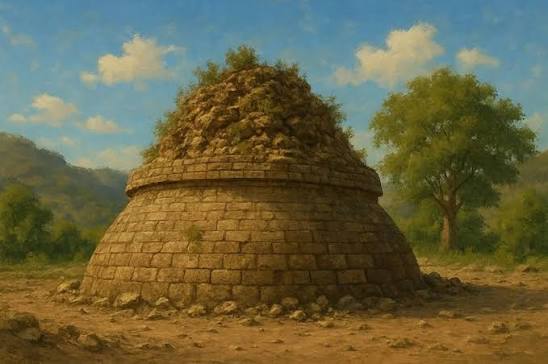
These relics provide clues about how ancient people worked, traded, traveled, communicated, worshipped, and understood the world around them. Some objects were carefully preserved, while others survived only because they were buried beneath soil, lost in shipwrecks, hidden inside buildings, or protected by unusual environmental conditions.
Archaeologists study these discoveries like pieces of a giant puzzle. A single object may not tell the entire story, but when combined with other evidence, it can reveal remarkable details about civilizations that existed thousands of years ago.
The Ancient Antikythera Mechanism
Among the most fascinating ancient relics ever discovered is the Antikythera Mechanism.
It was recovered from a shipwreck near the Greek island of Antikythera in the early twentieth century. At first, the heavily corroded object looked like an ordinary collection of damaged bronze pieces.
Closer examination revealed something extraordinary.
The object contained a complex arrangement of gears designed to represent astronomical cycles. Researchers believe it could track celestial patterns and help predict certain astronomical events.
The mechanism demonstrates that ancient Greek craftsmen and scholars possessed sophisticated knowledge of mathematics, astronomy, and mechanical engineering.
What makes the discovery especially important is that very few similar mechanisms have survived. The Antikythera Mechanism may therefore represent only a small surviving example of a much broader technological tradition.
The relic challenges the assumption that advanced mechanical devices were exclusively a feature of much later periods.
Roman Coins Found Far From Rome
Coins may appear ordinary compared with statues or monumental architecture, but ancient coins are extremely valuable historical evidence.
Roman coins have been discovered across large parts of Europe, North Africa, and Asia. Their distribution provides clues about trade, military movement, political influence, and connections between distant communities.
A coin can contain the image of an emperor, a religious symbol, an inscription, or a reference to an important event.
Researchers can sometimes determine approximately when and where a coin was produced. When large groups of coins are discovered together, they can reveal patterns of economic activity.
Coins found far from their place of production can also demonstrate how goods and people moved across ancient trade networks.
A small piece of metal could therefore tell a much larger story about the movement of wealth and ideas.
Indus Valley Seals
Thousands of years ago, communities belonging to the Indus Valley Civilization produced small carved seals.
Many of these objects contain images of animals, symbols, and short inscriptions. Some feature a distinctive animal often described as a unicorn-like figure.
The seals are important because they provide evidence of an organized society with systems of identification, administration, trade, or communication.
However, one major mystery remains.
The writing found on many Indus Valley seals has not been conclusively deciphered. Researchers have studied the symbols for decades, but there is still no universally accepted reading of the script.
If the writing is eventually understood, these tiny objects could reveal information about names, occupations, political organization, religious beliefs, or commercial activities.
For now, the seals remain among the most intriguing relics of South Asian archaeology.
Egyptian Medical Papyri
Ancient Egypt left behind an enormous collection of written material, including documents describing medical knowledge.
The Ebers Papyrus is one of the best-known examples. It contains information about illnesses, treatments, remedies, and various medical observations.
Ancient Egyptian medical knowledge combined practical experience with religious and cultural beliefs.
Some treatments involved plants, minerals, food products, or other natural materials. The texts provide researchers with clues about how Egyptian healers understood the human body and attempted to treat disease.
Not every ancient remedy would be considered effective by modern medical standards. However, the documents demonstrate that Egyptian healers carefully observed symptoms and developed organized approaches to treatment.
These papyri are valuable because they preserve knowledge that might otherwise have disappeared completely.
The Roman Dodecahedrons
Archaeologists have discovered dozens of mysterious bronze objects known as Roman dodecahedrons.
They are relatively small, hollow objects with twelve pentagonal faces. Each face contains a circular opening, and the openings can differ in size.
Their exact purpose remains unknown.
Researchers have proposed several possibilities. They may have been used for measurement, surveying, crafting, astronomy, or ceremonial activities.
The lack of written evidence explaining them makes interpretation difficult.
What makes these objects particularly interesting is their widespread distribution across parts of the Roman world. Similar examples have been found in different locations, suggesting that they were not isolated experiments.
Even after years of research, their purpose remains uncertain.
The Roman dodecahedrons show that archaeology can sometimes reveal an object without revealing its original function.
Viking Swords and Their Hidden Stories
Weapons can reveal much more than the history of warfare.
Viking Age swords discovered across Europe provide evidence about craftsmanship, trade, social status, and cultural connections.
Some swords contain markings associated with particular workshops or production traditions. Their materials can also reveal where metal resources may have originated.
Certain high-quality blades appear to have traveled significant distances before reaching the communities that used them.
This suggests that Viking societies were connected to wider trade networks than their popular image as isolated raiders might suggest.
The burial of weapons alongside individuals can also provide clues about social status and cultural beliefs.
A sword buried in a grave is therefore more than a weapon. It can become evidence of technology, identity, wealth, and social organization.
Ancient Glass Reveals Long-Distance Trade
Ancient glass objects are another valuable source of information.
Beautiful glass bottles, cups, beads, and containers have been discovered across regions once connected to Mediterranean and Near Eastern trade networks.
Scientific analysis can sometimes determine the chemical composition of ancient glass. This can help researchers identify where the raw materials may have originated.
When similar glass objects are discovered far from their production centers, they provide evidence of long-distance trade.
These artifacts also reveal the skill of ancient craftsmen. Producing shaped and decorated glass required specialized knowledge and controlled heating techniques.
The spread of glass objects demonstrates that luxury goods could travel across enormous distances long before modern transportation existed.
Ancient Tools Reveal Everyday Life
Some of the most important archaeological discoveries are not spectacular at all.
Stone blades, grinding stones, needles, fishing equipment, agricultural tools, and simple household objects can reveal how ordinary people lived.
A grinding stone may provide evidence of food preparation. A fishing hook can reveal the importance of aquatic resources. Agricultural tools can demonstrate how communities cultivated land.
Because everyday objects were used repeatedly, they can reveal practical habits that monuments cannot.
These relics help researchers understand the lives of people who may never have appeared in historical writings.
In many ways, ordinary tools bring ancient history closer to everyday human experience.
Shipwreck Relics Preserve Forgotten Connections
Shipwrecks can act like time capsules.
When an ancient ship sank, its cargo could become buried beneath layers of sediment. Amphorae, tools, coins, pottery, weapons, and other objects can remain underwater for centuries.
These discoveries can reveal what merchants transported between distant regions.
A ship carrying pottery from one area and metal objects from another can demonstrate the existence of commercial relationships connecting different societies.
Shipwreck archaeology is especially valuable because objects found together can provide a snapshot of economic activity at a particular moment.
The remains of a single vessel can therefore tell researchers about trade, technology, navigation, and daily life.
Small Relics Can Tell Enormous Stories
Ancient relics do not need to be enormous to be historically important.
A small seal can reveal an unknown writing system. A coin can demonstrate long-distance trade. A medical papyrus can preserve forgotten knowledge. A damaged machine can reveal sophisticated engineering.
These objects survive through countless circumstances. Some were buried deliberately, others were accidentally lost, and many were preserved simply because the environment protected them.
Modern archaeology gives researchers increasingly powerful ways to study them without destroying the evidence.
Scientific dating, chemical analysis, imaging technology, and digital reconstruction can reveal details that earlier generations could not see.
The ancient past is therefore not completely silent.
Every relic carries traces of the people who made, used, traded, or buried it. When researchers carefully study those traces, forgotten objects can become windows into worlds that disappeared thousands of years ago.
And sometimes, the smallest discovery can open the door to one of history’s biggest stories.