
There are places around the world where the noise of modern civilization seems to disappear completely. Roads become narrow or vanish altogether, mobile signals become unreliable, and familiar conveniences are replaced by quiet landscapes shaped mainly by nature. These remote destinations offer a different kind of travel experience because reaching them can require patience, careful planning, and a willingness to spend time far away from crowded tourist centers.
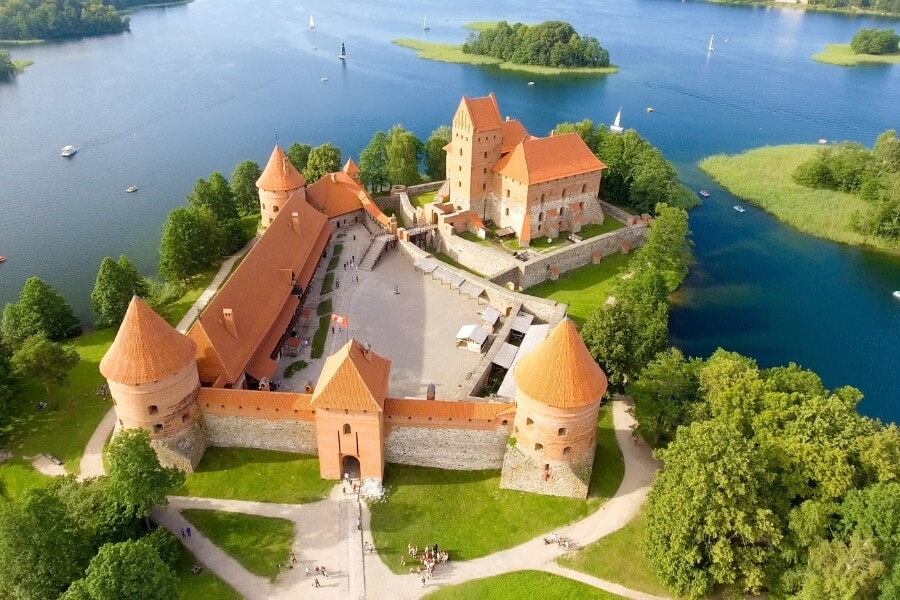
Some are hidden among mountains, while others sit on isolated islands, deep within forests, or across vast stretches of desert. Their distance from major cities has helped preserve unusual landscapes, traditional lifestyles, and ecosystems that have changed less rapidly than those found in heavily developed areas. Visiting such places can provide a closer look at environments and communities that remain relatively untouched by mass tourism.
The Remote Villages of Mustang
High in the Himalayas of Nepal, the Mustang region contains dramatic valleys, dry mountains, ancient settlements, and centuries-old cultural traditions. The landscape looks remarkably different from the greener areas associated with many other parts of Nepal. Tall mountains surround barren valleys where wind and erosion have shaped the terrain into unusual forms.
Some villages are separated by long mountain routes, making travel physically demanding. Traditional stone houses, monasteries, narrow paths, and agricultural terraces create a landscape that appears to have changed slowly over generations.
The region’s isolation has contributed to the preservation of distinctive architecture and cultural practices. Travelers who reach remote settlements can experience a quieter environment where daily routines are still closely connected to farming, animals, weather, and the surrounding mountains.
Tristan da Cunha in the South Atlantic
Tristan da Cunha is one of the world’s most isolated inhabited islands. Located in the South Atlantic Ocean, it lies far from major continental landmasses and is surrounded by enormous distances of open water.
The island has a small permanent population and a settlement commonly known as Edinburgh of the Seven Seas. Life there is shaped strongly by the island’s geography and weather. Supplies and visitors generally depend on limited transportation connections, making spontaneous travel very different from visiting a conventional tourist destination.
The isolation has helped create a distinctive community environment. Residents rely on local resources while also maintaining connections with the outside world through modern communication and occasional transportation.
For travelers interested in remote destinations, Tristan da Cunha represents an unusual combination of modern community life and extreme geographic isolation.
The Hidden Valleys of Bhutan
Bhutan is well known for its Himalayan landscapes, but some of its less accessible valleys remain far removed from the pace of major international cities. Steep mountains, forests, monasteries, and traditional settlements dominate many areas.
Travel through remote parts of Bhutan can involve winding mountain roads and long journeys between communities. Some areas are accessible only through demanding routes, which naturally limits visitor numbers.
The country’s architecture is another major attraction. Traditional buildings often feature detailed wooden designs, painted decorations, and forms adapted to the mountainous environment.
Remote valleys also provide opportunities to observe landscapes where forests, agriculture, religious sites, and villages exist closely together. The combination creates a setting very different from highly urbanized destinations.
The Faroe Islands’ Quiet Coastal Settlements
Located in the North Atlantic, the Faroe Islands consist of rugged islands connected by roads, tunnels, ferries, and bridges. Although they have modern infrastructure, many communities remain small and surrounded by dramatic natural scenery.
Cliffs rise from the sea, while green hills and narrow valleys create a landscape that can appear almost otherworldly. Small villages often contain colorful houses clustered around sheltered coastal areas.
Weather can change quickly, adding another dimension to the experience. Fog, wind, rain, and sunlight can transform the same landscape several times within a day.
Away from the larger settlements, visitors can find quiet hiking routes and coastal viewpoints where the sound of the sea becomes more noticeable than traffic or urban activity.
The Oases of the Sahara
The Sahara is often imagined as an endless landscape of sand, but the desert contains mountains, rocky plateaus, valleys, ancient settlements, and isolated oases.
Some oasis communities developed around natural sources of water and became important stopping points for travelers crossing the desert. Palm trees, agricultural plots, traditional buildings, and surrounding desert landscapes create striking contrasts.
Remote desert destinations require careful preparation because distances can be enormous and environmental conditions can change quickly. Yet this difficulty is part of what makes them different from conventional travel locations.
In these areas, the night sky can also become a major attraction. Far from bright city lights, stars can appear much more clearly, offering a view that many urban residents rarely experience.
Socotra and Its Unusual Landscape
Socotra is an island archipelago in the Arabian Sea known for plants and landscapes found nowhere else in the same combination. Its geographic isolation has allowed many species to evolve independently over long periods.
The dragon blood tree is among its most recognizable plants. With a broad umbrella-shaped crown and unusual appearance, it has become closely associated with the island.
Socotra also contains limestone caves, mountains, beaches, valleys, and coastal environments. Some areas remain difficult to reach because of their terrain and limited infrastructure.
The island demonstrates how isolation can influence biodiversity. Its unusual natural environment has attracted scientists interested in evolution, ecology, conservation, and the relationship between geography and biological diversity.
The Mountain Communities of Georgia
In the high Caucasus Mountains of Georgia, some villages are located in valleys surrounded by enormous peaks. Remote settlements such as those in the Svaneti region contain distinctive stone towers and traditional buildings that reflect centuries of adaptation to mountainous conditions.
Traveling through these areas can involve narrow roads, steep slopes, and rapidly changing weather. The landscape itself becomes part of the experience.
Traditional towers were historically associated with local households and defensive purposes. Today, they remain important architectural features and symbols of the region’s heritage.
The combination of mountain scenery, old stone architecture, small villages, and traditional lifestyles makes remote areas of Georgia especially interesting for travelers looking for destinations outside conventional tourist routes.
The Alaskan Wilderness
Alaska contains enormous areas where communities are separated by mountains, forests, rivers, and coastal waters. Some settlements are accessible primarily by small aircraft or boats rather than conventional road networks.
The scale of the landscape is one of its defining characteristics. Glaciers, forests, tundra, mountains, and coastal environments can exist within the same broad region.
Remote Alaska also demonstrates how people adapt to challenging environments. Weather conditions influence transportation, food supplies, construction, and everyday routines.
Visitors who travel beyond major Alaskan cities may encounter landscapes where human development occupies only a small portion of the surrounding environment.
The Empty Landscapes of Patagonia
Patagonia stretches across southern Argentina and Chile, covering enormous areas of mountains, plains, forests, glaciers, and lakes. While several famous destinations attract visitors, large sections of the region remain sparsely populated.
Long distances are a defining feature of travel through Patagonia. Roads can pass through open landscapes for hours without reaching a large settlement.
The region’s dramatic scenery includes the Andes, glacial valleys, wind-shaped plains, and remote lakes. Strong winds can also become part of everyday travel, particularly across exposed areas.
For travelers seeking solitude, Patagonia offers a rare opportunity to experience vast landscapes where the horizon can remain almost completely open.
The Quiet Islands of the Pacific
The Pacific Ocean contains thousands of islands, but many are far removed from the major routes used by international travelers. Small communities can exist on islands where daily life depends heavily on fishing, agriculture, local transportation, and marine conditions.
Some islands have only limited infrastructure, which naturally restricts tourism. Their beaches may be beautiful, but their greatest attraction can be the slower pace of life.
Remote Pacific islands also contain important ecosystems. Coral reefs, coastal forests, lagoons, and marine habitats support diverse species, making conservation especially important.
Visiting such destinations requires travelers to respect local communities and fragile environments because limited resources can make the effects of tourism more significant.
The Remote Highlands of Scotland
Scotland’s Highlands contain broad valleys, rugged mountains, lochs, forests, and small settlements spread across large areas. Although Scotland has excellent transportation in many regions, some Highland landscapes can still feel remarkably distant from urban life.
Long walking routes and remote roads lead into areas where buildings become increasingly rare. Weather can change quickly, and the landscape can appear dramatically different depending on the season.
Old stone structures, abandoned settlements, historic paths, and traditional crofting landscapes add another layer of interest.
These places demonstrate that a destination does not always need to be extremely distant from civilization to provide a sense of isolation. Sometimes geography and low population density are enough.
Why Remote Destinations Feel Different
The appeal of isolated destinations is not simply about distance. It comes from the relationship between people and their surroundings.
In a major city, travelers can often find restaurants, transportation, stores, internet access, and accommodation within minutes. Remote destinations may require planning because these conveniences are limited or unavailable.
This changes the rhythm of travel. People spend more time observing the landscape, walking, waiting for transportation, interacting with local communities, and adapting to weather conditions.
Remote travel can also encourage visitors to become more conscious of resources. Water, food, electricity, and transportation may not be available as easily as they are in large cities.
Responsible Travel in Isolated Places
Remote destinations can be environmentally and culturally sensitive. A small increase in visitors can place pressure on waste systems, water supplies, wildlife, and local infrastructure.
Travelers can reduce their impact by following local rules, avoiding litter, respecting private property, staying on appropriate paths, and supporting locally operated businesses where possible.
Cultural respect is equally important. Traditional communities should not be treated as attractions simply because their lifestyles appear different from those of visitors.
Responsible travel allows people to experience remote places without contributing unnecessarily to the problems that can threaten the very qualities that make them special.
Finding Distance in a Connected World
Modern technology has made it easier than ever to explore information about almost every corner of the planet. Satellite imagery can show distant islands, digital maps can reveal mountain routes, and online photographs can introduce travelers to places they may never have heard of before.
Yet seeing a destination on a screen is very different from experiencing its physical distance.
In remote regions, the journey itself becomes part of the story. A long mountain road, a boat crossing, a difficult hiking trail, or a flight over empty landscapes can create a sense of separation that is difficult to reproduce in ordinary tourism.
These destinations remind travelers that the modern world has not erased every quiet corner of the planet. There are still mountains where villages remain small, islands surrounded by enormous oceans, deserts shaped by ancient routes, and valleys where nature dominates the horizon.
For anyone seeking a different relationship with travel, such places offer more than beautiful scenery. They provide an opportunity to slow down, observe unfamiliar environments, and understand how people and communities continue to live in locations far removed from the routines of modern urban life.