
Ancient cities often appear frozen in time, with their temples, walls, streets, and monuments standing as reminders of civilizations that disappeared centuries ago. Yet what can be seen above the ground represents only a small part of their story. Beneath many historic settlements lies another world filled with buried buildings, forgotten roads, underground rooms, drainage systems, storage areas, and objects left behind by ordinary people. In some places, entire sections of ancient communities remain hidden under layers of soil and later construction.
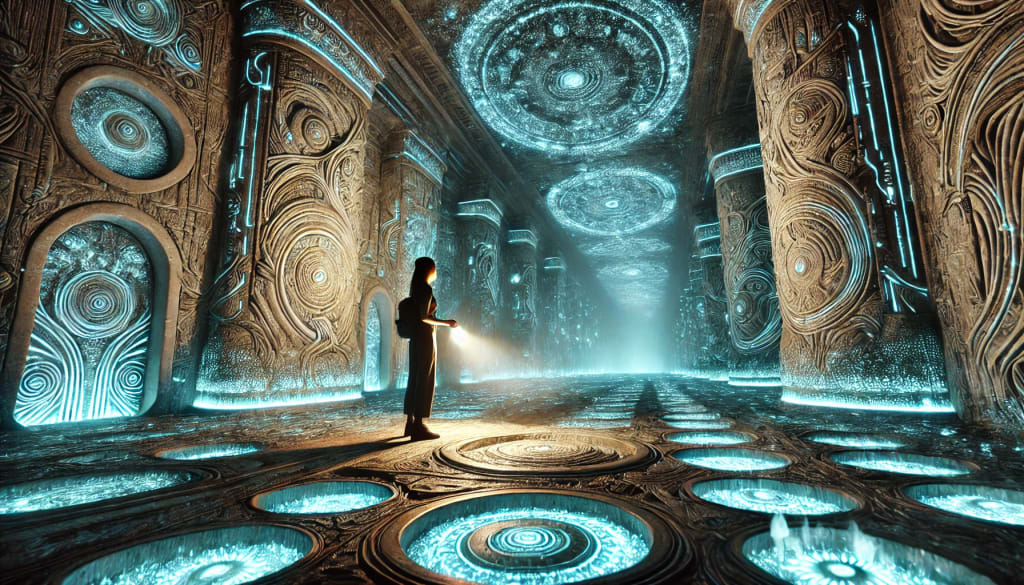
These underground remains can reveal details that written records never preserved. Archaeologists can learn how people lived, what they ate, how they managed water, how they responded to disasters, and how cities changed over generations. Sometimes a discovery beneath an old street can completely change the understanding of a civilization.
The hidden world beneath ancient cities is therefore not simply a collection of buried ruins. It is a record of human life preserved beneath the surface.
Why Ancient Cities Became Buried
The disappearance of an ancient city was rarely caused by a single event. Over hundreds or thousands of years, natural processes and human activity gradually changed the landscape. Buildings collapsed, walls were demolished, floods deposited sediment, earthquakes destroyed structures, and later inhabitants constructed new buildings over older ones.
In many ancient settlements, people did not completely abandon a location after a building became damaged. Instead, they repaired it or built something new on top of the existing remains. This created layers of occupation. A house from one period could eventually become the foundation for another structure from a later period.
Over time, streets became covered, floors were raised, and older buildings disappeared beneath newer construction. What appears to be a single archaeological site may therefore contain several different cities stacked vertically.
This process is especially valuable to archaeologists because each layer can represent a different period of human activity. Studying these layers allows researchers to reconstruct how communities developed and changed.
Underground Streets and Forgotten Buildings
One of the most fascinating discoveries beneath ancient settlements is the presence of streets that no longer exist at the modern surface. Ancient roads were sometimes buried by natural sediment or covered by later construction. When archaeologists excavate them, they can discover evidence about transportation, trade, and daily movement.
Old streets may contain wheel marks, drainage channels, stone paving, shops, entrances, and fragments of pottery. Their layout can also reveal how the city was organized.
Buildings buried beneath later structures can be equally revealing. Archaeologists may uncover homes with rooms, courtyards, kitchens, storage spaces, wells, and workshops. These structures provide a more personal view of ancient life than monumental temples and palaces.
A large monument can tell researchers about political power, but a simple house can reveal how ordinary families actually lived.
The Hidden Importance of Ancient Water Systems
Water was one of the greatest challenges faced by ancient cities. Large populations required reliable supplies for drinking, agriculture, cooking, cleaning, and industry. As a result, many civilizations developed impressive systems for collecting, transporting, storing, and removing water.
Some of these systems were built underground to protect water from contamination and evaporation. Archaeologists have discovered channels, reservoirs, wells, cisterns, pipes, and drainage networks beneath ancient settlements.
These structures demonstrate that ancient engineers understood practical problems remarkably well. Some systems used carefully calculated slopes to move water through channels. Others stored rainwater for use during dry periods.
Underground water infrastructure can also reveal information about the environment. A city with extensive reservoirs may have experienced seasonal shortages, while sophisticated drainage systems may indicate efforts to control flooding or protect buildings from excessive moisture.
Hidden Rooms Beneath Temples and Public Buildings
Religious and public structures often had areas that were not visible from the outside. Beneath some ancient buildings, archaeologists have discovered foundations, storage chambers, passageways, and rooms connected to earlier structures.
These spaces could have served practical purposes. Storage rooms might have held food, valuable materials, or religious objects. Foundations could preserve evidence of earlier buildings that existed before the visible structure.
Such discoveries are important because ancient monuments were often rebuilt many times. A temple standing today in an archaeological site may represent only the latest stage of a much longer history.
By examining what lies beneath it, researchers can determine how its design changed and how different generations used the same sacred location.
Homes That Reveal Everyday Life
Some of the most valuable archaeological discoveries are not spectacular treasures. They are ordinary objects found inside ancient homes.
Cooking vessels, grinding stones, tools, lamps, children’s objects, jewelry, food remains, and broken pottery can reveal how families spent their days. The location of these objects inside a building can also provide clues about how individual rooms were used.
For example, concentrations of cooking vessels may identify a kitchen area. Grinding equipment may indicate food preparation. Storage containers can reveal what types of crops or other products were kept inside the house.
These details help researchers move beyond the stories of kings and rulers. They make it possible to understand the lives of workers, merchants, farmers, craftspeople, and families whose names were never recorded.
Ancient Cities Preserved Under Modern Cities
In some parts of the world, modern communities developed directly over ancient settlements. This creates an unusual archaeological situation because researchers cannot simply excavate the entire ancient city.
Modern roads, buildings, homes, and infrastructure may occupy the same space as ancient streets and structures. Archaeologists must therefore work carefully, often investigating small areas whenever construction or restoration projects provide access.
Even a limited excavation can reveal important information. A foundation trench, underground utility project, or restoration effort may expose ancient walls or artifacts that had remained hidden for centuries.
This means archaeological discoveries do not always happen in remote deserts or isolated ruins. Sometimes the past is directly beneath a busy modern neighborhood.
Underground Cities and Places of Refuge
Some ancient communities deliberately constructed spaces below ground. These underground settlements could include rooms, passageways, storage areas, wells, ventilation shafts, and places for living or shelter.
Researchers believe that different underground complexes served different purposes depending on their location and historical circumstances. Some may have protected during periods of conflict, while others were connected with storage, agriculture, religious practices, or seasonal living.
Underground environments offered several practical advantages. They could provide stable temperatures, protection from extreme weather, and hidden spaces that were difficult to reach from the surface.
The design of such places demonstrates that ancient communities were capable of adapting their architecture to challenging environments.
What Buried Objects Can Tell Us
Every object found beneath an ancient city has the potential to contribute to a larger historical picture. A single piece of pottery may reveal information about manufacturing techniques or trade connections. A coin can help establish a date. A fragment of glass may indicate contact with distant regions.
Food remains can be even more informative. Seeds, grains, animal bones, and other organic remains can help researchers reconstruct ancient diets and agricultural practices.
Scientific analysis can sometimes determine where materials originated. This allows researchers to investigate trade networks that connected cities over long distances.
A buried object is therefore more than an artifact. It can serve as evidence for economic activity, cultural exchange, technology, migration, and changes in everyday life.
Natural Disasters Preserved Underground
Some archaeological layers were created by sudden disasters. Earthquakes, floods, volcanic eruptions, fires, and other events could destroy buildings rapidly and bury their contents beneath debris.
These disaster layers are particularly valuable because they can preserve a moment in time. Objects may remain where people left them, while walls and roofs collapse around them.
Researchers can study the pattern of destruction to understand what happened and how the community responded afterward. In some cases, later inhabitants rebuilt the city directly over the destroyed structures. In others, the settlement was abandoned.
Such evidence provides an unusual connection to the past because it captures not only how people lived but also how their communities experienced sudden change.
Secrets Hidden in Ancient Waste
What people threw away can tell archaeologists a surprising amount about their lives. Ancient rubbish deposits may contain broken pottery, animal bones, plant remains, tools, shells, charcoal, and countless other fragments.
Waste areas can reveal what people ate, what materials they used, and which activities took place nearby. They can even provide clues about social differences between households.
For archaeologists, rubbish is often valuable evidence because people usually discarded ordinary objects without intentionally preserving them. These discarded materials can therefore provide a less controlled and more realistic picture of daily life.
A simple pile of ancient waste may contain information that a carefully preserved monument cannot provide.
Why Some Secrets Remain Undiscovered
Despite advances in archaeology, enormous parts of ancient cities remain unexplored. Excavation is slow, expensive, and sometimes technically difficult. Researchers must also protect archaeological sites from damage.
In modern cities, excavation can be even more complicated. Archaeologists may have only small opportunities to investigate areas beneath existing buildings or roads.
There is also the problem of preservation. Organic materials can disappear completely in some environments, while fragile structures may collapse when exposed.
Modern technology is helping researchers investigate hidden areas without always digging them up. Ground-penetrating radar, aerial surveys, satellite imagery, laser scanning, and other techniques can reveal structures beneath the surface while reducing physical disturbance.
These methods are changing archaeology by allowing researchers to investigate large areas before deciding where excavation is necessary.
What Technology Is Revealing
Modern archaeological technology has transformed the search for buried cities. Remote sensing can identify unusual patterns in the landscape that may indicate walls, roads, foundations, or other structures.
Laser scanning technology can create highly detailed maps of archaeological sites. In difficult environments, these digital models can reveal features that are difficult to see from ground level.
Geophysical surveys can also detect buried structures without requiring extensive excavation. Researchers can compare these results with historical information, satellite images, and archaeological evidence to build a more complete picture.
Technology does not replace traditional archaeology. Instead, it gives researchers additional ways to ask questions about places that may remain inaccessible.
The Stories Still Waiting Beneath the Ground
Every ancient city has a visible history and a hidden one. The visible monuments often attract the greatest attention, but the buried layers can provide some of the most detailed evidence about how people actually lived.
Beneath an old street may be a forgotten house. Beneath a house may be an older road. Beneath that road may be another settlement belonging to a completely different period.
This layered history reminds us that cities are rarely created in a single moment. They grow, change, disappear, and sometimes return. Each generation leaves traces behind, even when later generations forget that those traces exist.
The most remarkable part of ancient archaeology may therefore be what has not yet been uncovered. Somewhere beneath soil, stone, modern buildings, or abandoned landscapes, countless pieces of human history may still be waiting to be found.