
Human civilization has existed for thousands of years, leaving behind temples, cities, tools, monuments, manuscripts, and countless clues about the people who came before us. Modern researchers have learned an enormous amount from these discoveries, but many ancient secrets remain difficult to understand.
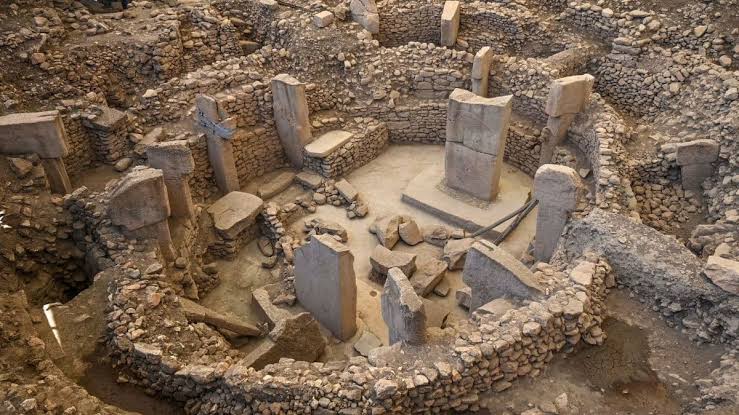
Some mysteries involve objects whose original purpose is uncertain. Others concern enormous structures, vanished settlements, strange symbols, or ancient technologies that appear surprisingly advanced for their time.
These mysteries do not necessarily require supernatural explanations. In many cases, researchers lack enough evidence to reach a definite conclusion. Every new excavation can reveal another piece of the puzzle.
Here are some forgotten ancient secrets that continue to fascinate researchers.
The Purpose of Stonehenge
Stonehenge is one of the world’s most recognizable prehistoric monuments.
Located in southern England, the site consists of enormous stones arranged in carefully planned formations. Archaeological evidence shows that construction took place over several stages beginning thousands of years ago.
Researchers have discovered evidence that the surrounding landscape was used by different communities for ceremonies, burials, and other activities.
The monument also has connections to the movement of the Sun during certain times of the year.
However, its exact purpose remains uncertain.
Stonehenge may have served several functions over different periods rather than having one single purpose. Its construction required significant planning and labor, raising questions about how prehistoric communities organized themselves.
The Mysterious Purpose of the Voynich Manuscript
The Voynich Manuscript is one of the world’s most famous mysterious books.
The manuscript contains hundreds of pages filled with unfamiliar writing and unusual illustrations. The text has not been conclusively deciphered, and its original purpose remains uncertain.
Some pages contain drawings of plants that are difficult to identify, while others show astronomical or biological-looking diagrams.
The manuscript dates to the early fifteenth century based on scientific analysis of its parchment.
Researchers have proposed many theories about the writing, including the possibility that it represents an unknown language, a coded system, or a constructed script.
Despite modern computing and cryptographic techniques, there is still no universally accepted interpretation.
Its mystery comes from the combination of an authentic historical object and writing that remains largely unreadable.
The Ancient Roman Concrete Mystery
Roman buildings have survived for centuries, and some ancient concrete structures remain remarkably durable.
Researchers have studied Roman concrete to understand why certain structures endured harsh conditions for such long periods.
One interesting feature involves lime particles and the chemical reactions that can occur when cracks develop.
Research suggests that some Roman concrete could undergo chemical processes that helped repair or stabilize small cracks.
Ancient builders obviously did not possess modern laboratories, but they developed practical construction methods through experience and experimentation.
The mystery is not that Romans possessed impossible technology. Rather, researchers are still learning how their materials and techniques worked together so effectively.
The Disappearance of the Indus Valley Script
The Indus Valley Civilization produced cities, drainage systems, trade networks, seals, and other sophisticated artifacts.
Yet one major part of its history remains difficult to understand.
The writing system found on seals and other objects has not been conclusively deciphered.
The inscriptions are generally short, which makes the task especially challenging. Without longer texts, researchers have limited material for identifying grammar, vocabulary, and meaning.
The script may contain information about administration, trade, religion, names, or other aspects of society.
If the writing were successfully deciphered, it could transform our understanding of one of the world’s earliest urban civilizations.
The Purpose of the Antikythera Mechanism
The Antikythera Mechanism is an ancient mechanical device recovered from a shipwreck near Greece.
It contains numerous gears and was designed to represent astronomical cycles.
Its existence surprised researchers because it demonstrates a level of mechanical sophistication that was once difficult to associate with ancient Greek technology.
Scientists have reconstructed parts of its operation using advanced imaging and computer modeling.
Even though researchers understand much more about the mechanism today, questions remain about its exact construction, original appearance, and how widely similar devices were used.
It may represent a larger technological tradition that has largely disappeared from the archaeological record.
The Mystery of the Phaistos Disc
The Phaistos Disc is a clay artifact discovered on the island of Crete.
Its surface contains symbols arranged in a spiral pattern. The symbols were apparently impressed into the clay before the object was fired.
The meaning of the symbols remains uncertain.
Researchers have proposed different interpretations, but no explanation has achieved universal acceptance.
The artifact is particularly fascinating because it contains a writing system that does not clearly match the better understood scripts of the ancient Aegean world.
Whether it represents a genuine writing system, a ceremonial object, or something else remains an open question.
The Purpose of the Nazca Lines
The Nazca Lines cover large areas of desert in southern Peru.
The ancient geoglyphs include animals, geometric forms, and long straight lines.
Researchers understand many details about how the designs were created. The Nazca people removed darker stones from the desert surface, exposing lighter material underneath.
The more difficult question is why they created such enormous designs.
Different theories connect the lines to religious ceremonies, water, pilgrimage routes, astronomy, and other cultural practices.
The truth may involve several purposes rather than one simple explanation.
The scale and precision of the geoglyphs remain remarkable achievements of ancient planning.
The Mysterious Purpose of the Roman Dodecahedrons
Archaeologists have discovered dozens of small hollow objects known as Roman dodecahedrons.
They are generally made from bronze and have twelve pentagonal faces, with circular openings of different sizes.
The objects date from the Roman period, but their exact purpose remains uncertain.
Researchers have suggested that they might have been used for measuring, crafting, astronomy, surveying, or ceremonial purposes.
None of these theories has been universally accepted.
The lack of written explanations makes the objects especially difficult to interpret.
They are a reminder that even relatively small artifacts can leave major gaps in our understanding of ancient life.
The Lost Knowledge of Ancient Medicine
Ancient societies developed surprisingly detailed medical practices.
Egyptian, Greek, Roman, Indian, Chinese, and other civilizations recorded information about injuries, plants, treatments, surgery, and anatomy.
However, much ancient medical knowledge disappeared because texts were lost, traditions changed, or techniques were not written down.
Some surviving documents provide only fragments of larger traditions.
Researchers continue comparing archaeological evidence with ancient texts to understand which treatments were effective and which were based on incorrect beliefs.
The study of ancient medicine reveals that historical knowledge was often a mixture of careful observation, practical experience, cultural beliefs, and experimentation.
The Lost Technology of Ancient Craftsmen
Ancient artisans produced objects that required remarkable skill.
Examples include precisely cut stone structures, complex metalwork, detailed glass objects, and carefully engineered tools.
Researchers can often identify the materials used, but reconstructing the exact techniques can be more difficult.
Ancient craftsmen may have relied on specialized knowledge passed from one generation to another.
When those traditions disappeared, the techniques could disappear with them.
This means an archaeological object can sometimes survive even after the knowledge required to make it has been forgotten.
Mysteries Often Survive Because Evidence Disappears
Ancient mysteries are not necessarily mysteries because people lacked intelligence. They often remain unresolved because the evidence has been damaged, buried, destroyed, or scattered over thousands of years.
A short inscription cannot provide the same information as a complete book. A broken machine cannot reveal every detail of its original design. A ruined city cannot always preserve the beliefs of the people who lived there.
Researchers therefore have to reconstruct the past from incomplete evidence.
That process requires archaeology, history, chemistry, physics, linguistics, and many other fields.
Every new discovery can change an existing interpretation.
The most fascinating ancient mysteries are not simply stories about things we do not know. They are reminders that human history is much larger than the surviving evidence.
Beneath the ruins, artifacts, manuscripts, and forgotten landscapes are countless stories that may never be completely recovered.
Yet every unanswered question gives researchers another reason to keep searching.