
Our planet is home to countless places that can make even the most familiar world feel mysterious. Some landscapes are hidden beneath the surface, while others are located in remote deserts, frozen regions, deep forests, or isolated islands. Their unusual appearance and remarkable history often leave visitors wondering how such places could exist naturally.
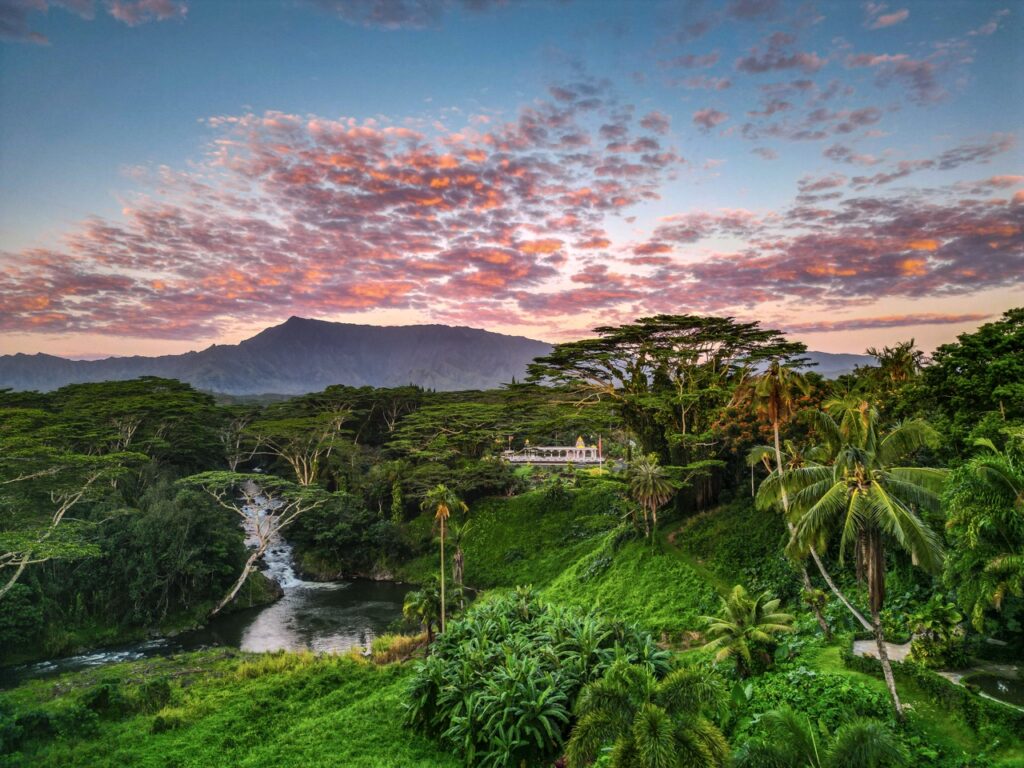
Many mysterious destinations have inspired legends for generations. Yet behind the stories are fascinating combinations of geology, climate, biology, and human history. In some cases, scientists understand how these places formed, while other features continue to attract research and debate.
These extraordinary locations reveal a side of Earth that feels almost disconnected from ordinary life.
The Marble Caves of Patagonia
Deep in the Chilean region of Patagonia lies General Carrera Lake, home to one of the world’s most unusual cave systems.
The Marble Caves are made from polished marble walls shaped over thousands of years by waves and water. The formations include smooth chambers, tunnels, and curved surfaces that seem almost sculpted by hand.
One of the most fascinating features is the changing color inside the caves. Sunlight reflects through the lake’s blue water and onto the marble walls, creating shades that can range from deep blue to turquoise and gray.
The appearance can change throughout the year depending on water levels, weather, and sunlight.
The caves are difficult to reach because of their remote location, which adds to their mysterious atmosphere. Their beauty is entirely natural, yet the smooth shapes can make them look like an underground work of art.
The Giant Crystal Cave of Mexico
Beneath the ground near Naica in Mexico lies a cave containing enormous gypsum crystals.
Some of these crystals reach extraordinary lengths, making the cave one of the most remarkable geological environments ever discovered.
The crystals developed under unusual conditions involving mineral-rich groundwater, heat, and long periods of geological stability.
The environment inside the cave is extremely hot and humid, making exploration difficult without specialized equipment.
The crystals themselves can look almost impossible because of their enormous size and remarkable geometric shapes.
Although the cave is a natural geological formation, its appearance resembles something from a fantasy world.
The site demonstrates that extraordinary landscapes do not always exist on the surface. Sometimes the most astonishing environments are hidden deep beneath our feet.
The Eternal Flame Falls in New York
In Chestnut Ridge Park in New York State, visitors can find a small natural flame burning behind a waterfall.
The combination seems impossible at first. Water is falling directly in front of a flame, yet the fire can continue burning.
The explanation involves natural gas escaping from cracks in the underlying rock. When enough gas reaches the surface and encounters an ignition source, it can produce a flame.
The waterfall helps create a dramatic visual effect, making the fire appear protected behind a curtain of water.
Natural gas seeps occur in various parts of the world, but the combination of a gas seep and waterfall is particularly unusual.
The site is a simple example of how geological processes can create scenes that appear to contradict the ordinary rules of nature.
The Namib Desert’s Dead Vlei
Deep inside Namibia’s Namib Desert lies Dead Vlei, a striking white clay pan surrounded by towering red sand dunes.
The landscape is famous for the dark remains of ancient camel thorn trees standing across the pale ground.
The trees died centuries ago after changes in the local river system prevented enough water from reaching the area. Because the environment is extremely dry, the dead trees have decomposed very slowly.
The result is an eerie landscape where black tree trunks stand against white ground and bright orange dunes.
The contrast makes Dead Vlei look almost surreal.
The location is not mysterious because of supernatural forces. Its unusual appearance is the result of changing water patterns, desert climate, and extremely slow decomposition.
The Mendenhall Ice Caves in Alaska
Inside the Mendenhall Glacier near Juneau, Alaska, temporary ice tunnels and caves can form as meltwater moves through the glacier.
The interiors can appear blue because dense glacier ice absorbs and scatters different wavelengths of light.
Walking through such an environment can feel like entering a frozen underground world.
However, these caves are not permanent. Glaciers move and melt, meaning their internal structures can change constantly.
This makes glacier caves both beautiful and unpredictable. A tunnel that exists during one season may disappear or change shape later.
The temporary nature of these formations adds another layer of mystery to an already extraordinary landscape.
The Richat Structure in Mauritania
In the middle of the Sahara Desert lies an enormous circular geological formation known as the Richat Structure.
From space, the formation resembles a giant eye surrounded by several rings.
Its unusual shape has attracted attention for decades. Early observers considered the possibility that it might have been created by an impact, but geological research has supported an explanation involving uplifted layers of rock and erosion.
The formation is enormous, making its circular structure difficult to appreciate from the ground.
The Richat Structure demonstrates how natural geological processes can create patterns that look almost deliberately designed.
The Rainbow Mountains of Peru
High in the Andes is a mountain landscape famous for its colorful geological layers.
Vinicunca, often called Rainbow Mountain, contains stripes of red, yellow, green, and other shades.
The colors come from different minerals within the rocks. Over long periods, geological activity and erosion exposed these layers on the mountain slopes.
The result looks like a giant natural painting.
The location’s high elevation also makes visiting challenging because the air contains less oxygen than at lower elevations.
Despite the difficult environment, the unusual colors attract visitors from around the world.
The Socotra Island Landscape
Socotra is an isolated island in the Arabian Sea known for its unusual plants and animals.
Its most recognizable plant may be the dragon blood tree, which has a broad umbrella-shaped canopy and an unusual branching structure.
Long geographic isolation allowed many species on Socotra to evolve independently from related species elsewhere.
As a result, the island contains a large number of endemic species.
Some parts of Socotra look so different from ordinary landscapes that photographs can appear digitally altered.
The island shows how isolation can shape ecosystems and create forms of life found nowhere else.
The Deep Ocean Has Hidden Landscapes
Some of Earth’s most mysterious landscapes cannot be visited simply by walking toward them. They are hidden beneath the ocean.
The seafloor contains enormous mountain ranges, volcanic formations, trenches, valleys, and plains.
The Mid Ocean Ridge is one of the largest geological structures on Earth and extends through the world’s oceans.
Because these landscapes exist under extreme pressure and darkness, studying them requires specialized equipment.
Scientists continue to discover new features and organisms in deep marine environments.
The hidden world beneath the ocean reminds us that a huge part of our planet remains difficult to explore.
Earth Still Feels Full of Secrets
Extraordinary places do not have to involve supernatural stories to feel mysterious. A glacier can create a temporary blue cave, geological forces can produce enormous circular formations, and an ancient river can transform a desert landscape.
These locations demonstrate that Earth’s natural processes are capable of producing scenes that seem almost impossible.
The more we explore, the more we understand how geology, climate, water, and life interact. Yet every discovery can also reveal new questions.
Our planet is not a simple, familiar sphere. It is a constantly changing world filled with hidden environments and unusual landscapes.
Sometimes, the mystery is not about something we cannot explain. It is about realizing how extraordinary the natural explanation actually is.